


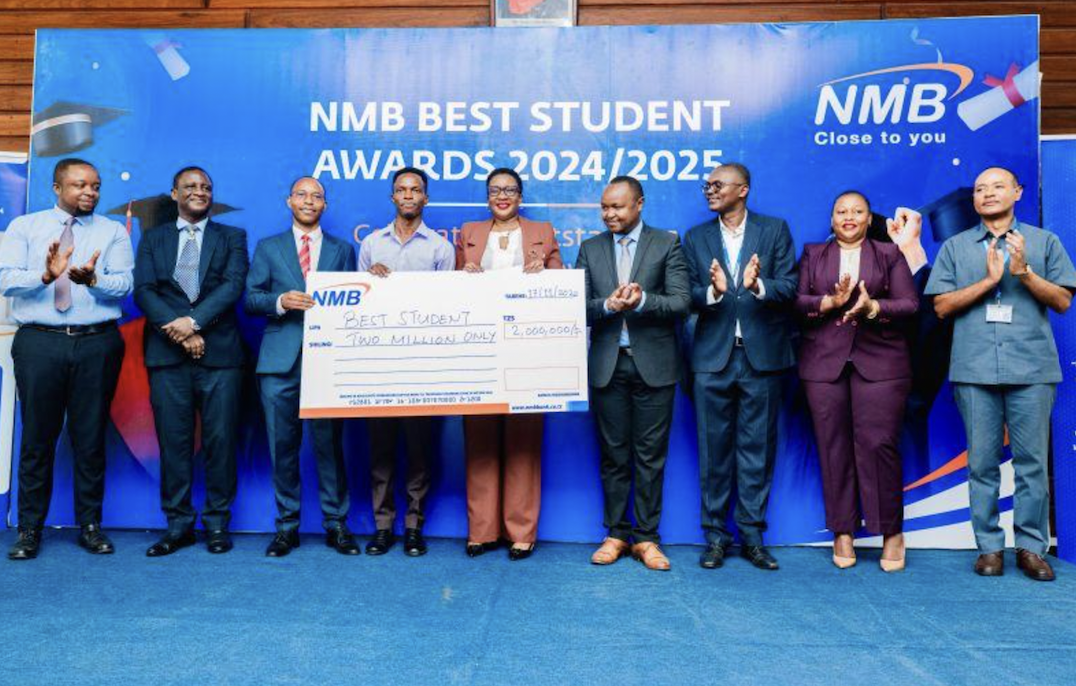
DAR ES SALAAM — Cooperation between NMB Bank and the University of Dar es Salaam is highlighting the role of partnerships between employers and educational institutions in preparing graduates for Tanzania’s workforce.
The five-year agreement, which runs through 2029, builds on a partnership launched in 2023. The NMB Best Student Awards have expanded from recognising three students at the university’s Business School to recognising 10 outstanding students across different academic disciplines.
At the October 12 awards ceremony, each recipient received TZS2 million, bringing the total value of the awards to TZS20 million. The partnership has also supported more than 150 graduates through career-readiness initiatives covering banking procedures, workplace ethics and professional communication.
For employers, the initiative addresses an important challenge: academic qualifications alone may not provide all the practical skills needed to succeed in a professional environment. Communication, teamwork, analytical thinking, digital literacy and an understanding of workplace procedures are also important across many industries.
Businesses can help strengthen these skills by working with universities through internships, mentoring, workplace visits, career fairs and practical training. Such initiatives allow students to gain a better understanding of employers’ expectations while giving companies opportunities to engage with emerging talent.
Universities can also benefit from closer cooperation with industry by gaining insight into changing workplace requirements. This can help inform course development and create stronger connections between academic learning and employment opportunities.
However, recognising high-performing students is only one part of improving graduate employability. Broader progress also depends on access to practical experience, relevant training and opportunities for graduates to demonstrate their skills.
For other Tanzanian businesses, the partnership provides an example of how collaboration with educational institutions can contribute to talent development. Companies of different sizes can support students through guest lectures, mentoring and structured work experience.
As businesses compete for skilled employees, stronger links between education and industry could help develop a workforce better prepared for professional responsibilities and changing business needs.

