


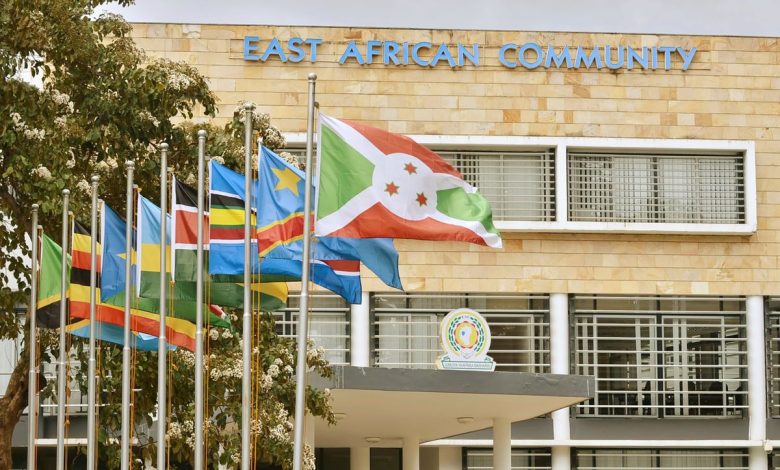
ARUSHA — The East African Community (EAC) is expanding its regional capacity to respond to infectious disease outbreaks, with the bloc estimating that US$45 million is needed to strengthen preparedness and response to Ebola and other viral haemorrhagic fever outbreaks.
The initiative includes specialised training for 120 doctors, nurses and other frontline health professionals from all eight EAC member states. The training is being conducted in Nairobi under the Training in the East African Community for High-Consequence Infectious Diseases (tEACh) programme, supported by Germany and implemented with the German Agency for International Cooperation (GIZ).
The programme is designed to build a regional pool of specialists who can respond to outbreaks while also training other health workers in their respective countries.
EAC Acting Director of Social Sectors Dr. Dorcas Omukhulu said regional coordination is essential because outbreaks can quickly cross national borders.
“Through this regional training, the EAC is building a common pool of health professionals with the practical skills to detect, manage and contain outbreaks while strengthening the ability of Partner States to respond together.”
The bloc is also expanding its diagnostic infrastructure. Its Mobile Laboratory Network currently comprises 10 laboratories across seven Partner States, providing testing capacity at strategic locations and points of entry. The EAC plans to increase the network to 34 mobile laboratories by the end of 2027.
The laboratories have previously supported responses to Ebola, Marburg, COVID-19 and Mpox, according to the EAC.
Germany has committed an additional €4.8 million to support the regional preparedness programme. The funding will help train 500 frontline health workers, support community sensitisation efforts involving 15,000 people in eastern Democratic Republic of Congo, procure 20,000 sets of personal protective equipment and support the registration of new Bundibugyo Ebola vaccines in EAC Partner States once approved by the World Health Organization.
For the region’s business community, stronger outbreak preparedness has implications beyond the health sector. Major disease outbreaks can affect workforces, cross-border movement, tourism, transport, trade and supply chains, making regional coordination an important part of economic resilience.
The EAC is therefore seeking additional support from development partners and other stakeholders to close the estimated US$45 million preparedness and response requirement.
The current training programme is part of a wider EAC effort to establish a sustainable network of clinical experts and trainers across all eight Partner States, with activities scheduled to continue through November 2026.

