


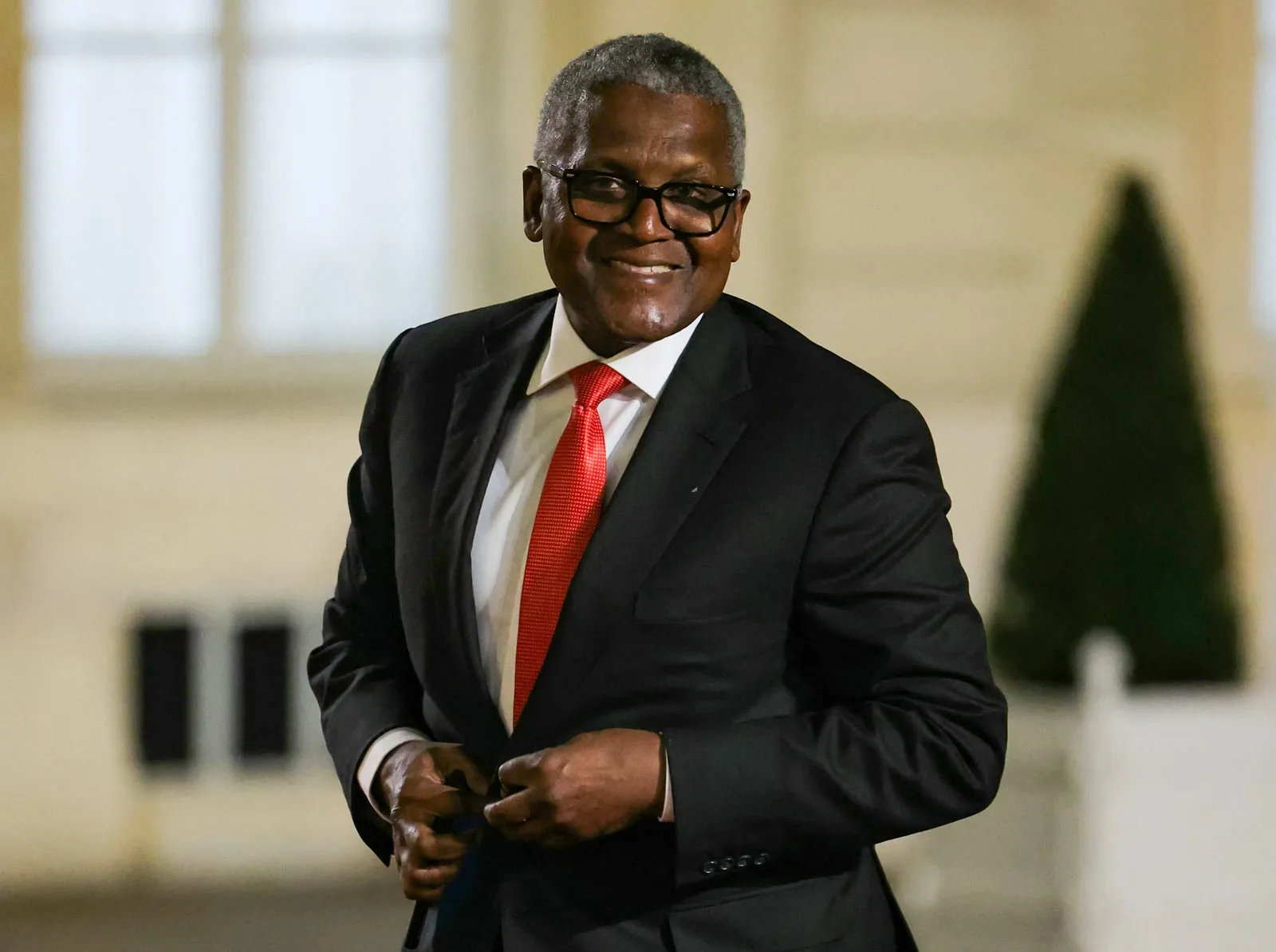
When Aliko Dangote appears at the top of Africa’s wealth rankings, the headline is usually about how much money he is worth.
But the more important business question is: what actually makes him wealthy?
Forbes puts Dangote’s real-time net worth at about $31.4 billion, making him Africa’s richest person. His wealth is closely tied to ownership of large productive businesses, particularly Dangote Cement, as well as his interests in fertiliser and petroleum refining.
That distinction matters for Tanzanian entrepreneurs because Dangote’s story is less about having billions of cash sitting in a bank account and more about owning valuable businesses and assets that can generate enormous economic value.
Wealth is built through ownership
Dangote Cement is one of the clearest examples.
Forbes says Dangote owns about 85 percent of the publicly traded company, which has annual production capacity of 48.6 million tonnes and operations across 10 African countries. His group has also built a major fertiliser business and the Dangote Refinery in Nigeria.
That means his wealth is connected to factories, companies, infrastructure, shares, production capacity and markets.
As the value of those businesses changes, so does his net worth.
It is an important distinction between earning money and building wealth.
A business owner may earn an income from a company. But if that company grows, expands into new markets and becomes more valuable, the owner’s stake can become worth far more over time.
From trader to industrialist
Dangote’s story also illustrates a broader African business opportunity: moving from trading products to controlling more of the production process.
His early business experience involved trading, but the Dangote Group eventually expanded into industries including cement, sugar, fertiliser and petroleum refining.
That progression — from commerce into production and industrial infrastructure — is particularly relevant to African economies seeking to reduce dependence on imported finished products.
It is also a model worth watching in Tanzania.
The country’s push towards manufacturing, mineral beneficiation, agricultural processing and stronger domestic supply chains creates opportunities for Tanzanian businesses to capture more value locally rather than simply selling raw materials.
The next generation of African businesses
Dangote’s wealth is also increasingly tied to the size of the markets his companies serve.
His cement operations span multiple African countries, while his refinery is positioned around one of the continent’s largest energy markets. The group is now also pursuing further expansion, including a planned $15 billion refinery project in Kenya.
For Tanzanian businesses, the lesson is not that every entrepreneur needs to build a multibillion-dollar industrial group.
It is that scale matters.
A Tanzanian company that solves a problem for 10,000 customers is valuable. One capable of solving that problem across Tanzania, East Africa and eventually Africa is potentially much more valuable.
Dangote’s ranking may therefore be a story about one man’s fortune.
But underneath the billions is a much bigger African business lesson:
The continent’s greatest wealth may increasingly belong to the entrepreneurs who own the companies producing, processing, financing and distributing what Africa needs.

